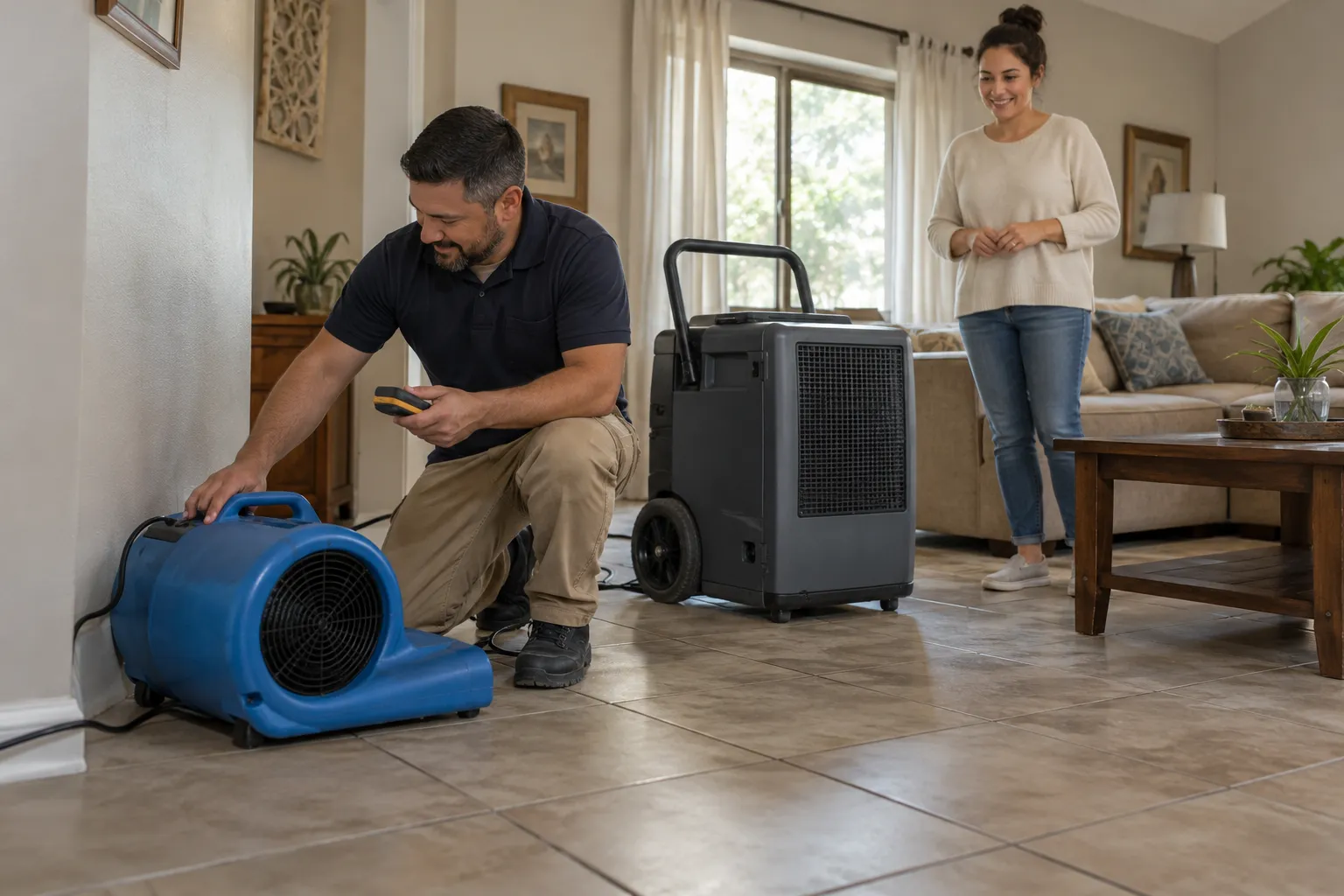
Water extraction pulls standing water out of your home. Structural drying takes care of the moisture that stays behind in floors, walls and framing. Both steps matter. If you stop after the first one, damp materials can stay wet for days.
Mysteryexcuse Restoration is a referral service for homeowners in Miami and the Greater Miami area. We do not do the work. We connect you with an independent provider in our network who does. With humid summers and frequent storms, a small leak can turn into a big problem. Less searching helps. Request a callback to check provider availability, and there is no obligation.
Water on the Floor? Start Here
If you see standing water, act first and read later. Stop the source if you can. Turn off the main water valve for a burst pipe or a failed supply line. Then call a local provider.
Why Standing Water Gets Worse Fast
Water does not stay where it lands. It soaks into baseboards, drywall, carpet pads and wood. In our warm, humid climate, damp materials can start to grow mold in a short time. Pulling water out early keeps a small problem small.
This is the heart of emergency water damage repair. Many providers can respond quickly, but availability varies, so call and ask.
What Water Extraction Means
Extraction is the removal of liquid water. It comes first because drying equipment cannot do much while puddles are still sitting on the floor.
Pumps and wet vacuums
A provider may use truck-mounted units, portable pumps or strong wet vacuums. Deeper water usually calls for a pump. Thin water on a floor often needs a wet vacuum or a special extraction tool.
Tile, slab and block homes
Many homes here are concrete block on a slab with tile floors. Tile does not soak up much water, which helps. But water can slip under the tile edges and into walls and cabinets. A good provider checks those hidden spots. Carpet and pad are different. The pad is often removed because it holds water like a sponge.
If you have one of the few basements or lower-level rooms nearby, flooded basement cleanup follows the same first step: get the water out.
What Structural Drying Means
Structural drying is how a provider dries the building itself. That means subfloors, wall bottoms, framing and trim. It is not the same as letting a fan run in the room.
Air movers
These low, loud fans push air across wet surfaces. Moving air helps water leave the material.
Dehumidifiers
Air movers lift moisture into the air. Dehumidifiers pull it back out. In a humid place, this step is very important, because the air already holds a lot of water.
Moisture readings
A provider should use a meter to check materials. Readings show what is still wet. They also show when the job is done, so nobody has to guess.
How Long Does Drying Take?
Many jobs take a few days. Big losses, thick materials and wet weather can take longer. Humidity in the home matters a lot. A provider should check readings each visit and tell you what the numbers mean.
What You Can Do While You Wait
A few simple steps can help while you wait for a provider to arrive.
- Turn off the water source if you can do so safely.
- Move small items, rugs and electronics to a dry spot.
- Lift furniture off wet floors or place foil under the legs.
- Open closet doors and cabinet doors.
- Take photos and short videos of the damage.
- Keep wet fabric and paper items to show the provider.
Safety First
Water and power are a bad mix. If water is near outlets or the panel, stay out and call an electrician or the utility. Avoid walking through deep water. After a storm or a backup, the water may be unsafe, so wear boots and gloves. Do not use a regular household vacuum on water.
Ask Before You Hire
You will likely talk to more than one provider. A few questions make the choice easier.
Questions worth asking
- What will you do first, and what comes after?
- Do you take moisture readings, and will I see them?
- How many fans and dehumidifiers do you expect to use?
- Can you give me a written quote before work starts?
- Do you carry insurance for the work?
What a good answer sounds like
Clear and specific. A good provider explains steps in plain words, shares readings and puts the plan in writing. They say what they do not know yet.
Red flags
Be careful with anyone who will not give a written quote, pushes you to sign right now, or says drying can be skipped. Vague answers about equipment are a warning too.
Insurance and Paperwork
Some policies may cover sudden water damage. Slow leaks and floods are often treated differently, so check your policy. Providers can often help document the damage for a claim. Keep your photos and receipts.
Ready to Talk to a Provider?
You do not need to sort through a long list of names. Call, describe what you see, and ask about availability.
What's Included
Standing Water Removal
A provider uses pumps and wet vacuums to take liquid water out of rooms, floors and low areas.
Hidden Moisture Checks
Meters help find wet spots behind walls, under floors and inside cabinets that the eye cannot see.
Fans and Dehumidifiers
Air movers and dehumidifiers work together to pull moisture out of building materials and the air.
Progress Readings
Providers can take readings during the job so you can see when materials are drying properly.
What Extraction and Drying Often Cost
Prices vary by water amount, area size, materials and equipment days. These are typical U.S. ranges only. Ask each provider for a written quote before work begins.
| Item | Typical U.S. range | Note |
|---|---|---|
| Water extraction, small area | $300 – $1,000 | Depends on depth and square footage |
| Water extraction, whole level | $1,000 – $4,000 | Larger floors need more equipment |
| Structural drying equipment | $800 – $3,500 | Often priced per day and per unit |
| Wet carpet pad removal | $200 – $1,000 | Varies by room size |
| Moisture monitoring visits | $100 – $500 | Sometimes included in the job |
| Full extraction and drying job | $1,500 – $7,000 | Larger or contaminated losses cost more |
How It Works
Make the Call
Call and describe what you see. Ask the provider about availability for your area.
Share the Details
Tell them the water source, how long it has been wet, and which rooms are affected.
Review the Quote
Ask for a written quote with the plan, equipment and expected drying days.
Choose and Proceed
Pick the provider you feel good about. The provider then does the work.
Why Call Mysteryexcuse Restoration
One Call, Less Searching
Skip the long list of names. Request a callback to reach an independent local provider.
Small Problem First
Reaching a provider early can keep wet floors and walls from turning into larger repairs.
Ask Before You Hire
We share the questions to ask and the red flags to watch for before you decide.
No Obligation
You can ask about availability and an estimate without any pressure to move forward.
Other Services
Need water extraction and structural drying in Miami?
- Less searching, more doing
- Independent local providers
- Ask for a written quote
- No obligation to hire
Water Extraction and Structural Drying FAQ
How long does structural drying take after water extraction?
Many homes need about three to five days, but it varies. Thick materials, humid weather and the amount of water all matter. A provider should check moisture readings and explain when drying is done.
Can I just use box fans to dry my house after a flood?
Box fans move air but do not remove much moisture, especially in humid weather. Walls and subfloors can stay damp inside. Providers use stronger air movers and dehumidifiers, and they measure with moisture meters.
Does homeowners insurance cover water extraction and drying?
Some policies may cover sudden damage, such as a burst pipe. Floods and slow leaks are often treated differently. Check your policy, take photos, and ask the provider to help document the damage.
Reach a local provider
Water where it should not be? Request a callback to check which independent providers in our network are available near you, or send a note and request an estimate. No obligation.
No obligation