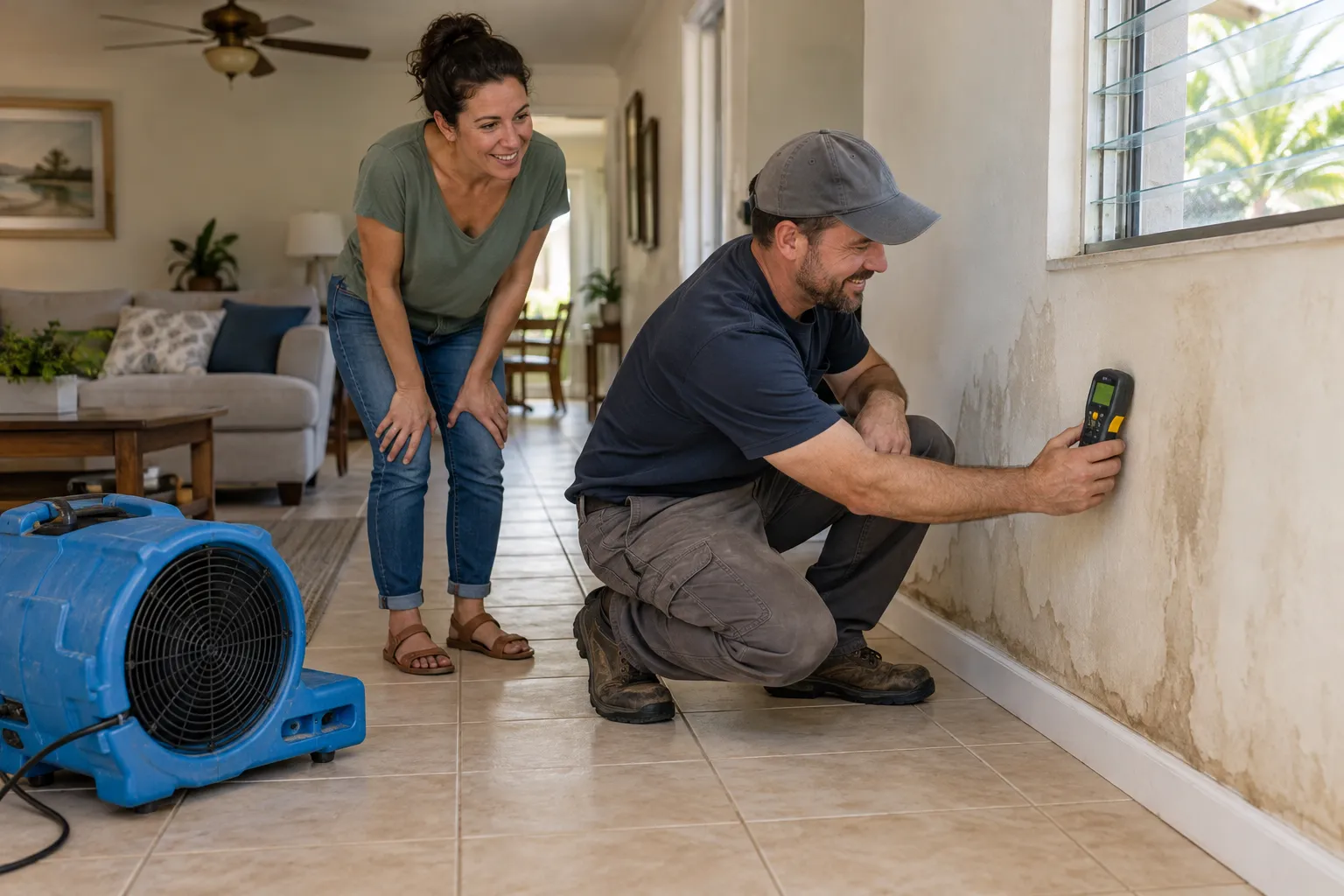
Water damage can start small. A leaking pipe, a failed appliance hose or a storm-driven roof leak can soak floors and walls fast. In Miami and the Greater Miami area, humid air makes it worse, because damp materials stay damp.
Mysteryexcuse Restoration is a referral service. We do not do the repairs. We connect you with an independent local provider in our network, and that provider does the work. Request a callback to check provider availability, ask good questions, and decide with no obligation. Less searching, more answers.
Water in Your Home? Start Here
Take a breath. Then take a few safe steps while you reach a provider.
- Stop the source if you can. Shut off the main water valve for a pipe leak.
- Turn off power to wet areas if it is safe to reach the panel.
- Stay out of standing water near outlets or cords.
- Move small items, rugs and electronics to dry ground.
Then make the call. Many providers can respond quickly, but availability varies, so ask.
Why Acting Early Helps
In a humid place, wet materials dry slowly. Drywall, wood trim and carpet pad soak up water and hold it. Mold can begin to grow within a day or two in warm, damp air. That is why a small problem first matters.
A fast call can keep a wet corner from becoming a wet room. It can also keep the repair smaller.
What Restoration Usually Includes
Water damage restoration is more than mopping up. A provider will usually follow a set of steps.
Inspecting and Finding the Moisture
The provider checks how far the water went. Meters can find damp spots behind walls and under floors that you cannot see.
Removing the Water
Pumps and vacuums pull out standing water. This comes first, before any drying work begins.
Drying and Dehumidifying
Fans and dehumidifiers dry the air and the materials. In a humid climate, this step can take several days.
Cleaning and Sanitizing
Surfaces and belongings may be cleaned and treated. This matters most when the water was dirty.
Repairs and Rebuilding
Some jobs end with drying. Others need new drywall, flooring or paint. Ask the provider what is included in the quote.
Know Your Type of Water
Not all water is the same. The source changes the plan.
- Clean water: from a supply line or a broken pipe. It is the least risky, but it can turn worse if left alone.
- Gray water: from a washer or dishwasher. It may carry germs or soap.
- Black water: from sewage or flood water. It is unsafe. Keep family and pets away.
Storm flooding is usually treated as black water. Tell the provider where the water came from so they can plan well.
Water Damage and Your Insurance
Some policies may cover sudden damage, like a burst pipe. Slow leaks and flood water are often treated differently, so check your policy or ask your agent.
Providers can often help document damage for a claim. Take your own photos too. Keep receipts and notes about what you did and when.
Ask Before You Hire
A good provider is happy to answer questions. Here are a few to try, and what a good answer sounds like.
Can You Explain the Plan?
A good answer is clear and simple. You should hear what will be removed, dried and checked.
How Will You Know It Is Dry?
Look for moisture readings taken more than once. A provider who only says it feels dry is a concern.
Can I Get a Written Quote?
Yes should be the answer. Written quotes help you compare and avoid surprises.
Red Flags
- Pressure to sign right away
- No written scope of work
- Vague answers about drying
- A large payment demanded up front
Getting Back to Normal
After drying, the provider checks readings again. Then repairs can begin. Keep an eye out for musty smells, stains or peeling paint in the weeks after. Tell the provider if you see them.
In storm season, it helps to look at your gutters, roof and drains before heavy rain. Small fixes can prevent big messes.
What's Included
Water Removal
Pumps and vacuums remove standing water so drying can begin and damage stops spreading through the home.
Moisture Checks
Meters help find hidden damp spots in walls, floors and ceilings that you cannot see by eye.
Drying Equipment
Fans and dehumidifiers dry the air and materials, which matters a lot in humid weather.
Cleaning and Repairs
Cleaning, sanitizing and rebuilding may follow, depending on how wet the home got and what was damaged.
What Restoration Often Costs
Costs vary a lot by job size, water type and materials. These are typical U.S. ranges only. Always get a written quote from the provider before work begins.
| Item | Typical U.S. range | Note |
|---|---|---|
| Small leak cleanup | $400 – $1,500 | One room, clean water |
| Water extraction | $500 – $2,500 | Depends on depth and area |
| Structural drying | $1,000 – $4,000 | Several days of equipment |
| Mold testing or treatment | $500 – $3,000 | Only if growth is found |
| Drywall and paint repair | $300 – $2,500 | Varies by wall area |
| Flooring replacement | $1,500 – $8,000 | Depends on material and size |
How It Works
Make the Call
Call and describe what happened. Say where the water came from and how far it spread.
Check Availability
Ask the provider about timing. Availability varies, and many providers can respond quickly.
Review the Quote
Ask for a written quote and scope. Compare it, ask questions and take your time.
Start the Work
The provider removes water, dries the space and explains the next repair steps with you.
Why Call Mysteryexcuse Restoration
One Call
Skip long searching. Request a callback to reach an independent local provider in our network, with no obligation.
Local Providers
Providers know area homes, from block-built slab houses to condos, and the humid weather they face.
Better Questions
We share what to ask and what red flags to watch, so you can choose with confidence.
Your Decision
You decide what happens next. Ask about availability, scope and written quotes before you agree.
Other Services
Need water damage restoration in Miami?
- Less searching, more doing
- Independent local providers
- Ask for a written quote
- No obligation to hire
Water Damage Restoration FAQ
How fast does water damage get worse?
It can spread quickly. Wet drywall and carpet soak up water, and mold can start growing in a day or two in humid air. Call early.
Will my insurance cover water damage restoration?
Some policies may cover sudden damage, like a burst pipe. Flood and slow leaks are often treated differently. Check your policy, and ask the provider about documenting damage.
Can I dry my home myself?
Small spills, yes. But hidden moisture in walls and floors is hard to find. A provider uses meters and equipment, which helps prevent mold and repeat damage.
Reach a local provider
Water where it should not be? Request a callback to check which independent providers in our network are available near you, or send a note and request an estimate. No obligation.
No obligation