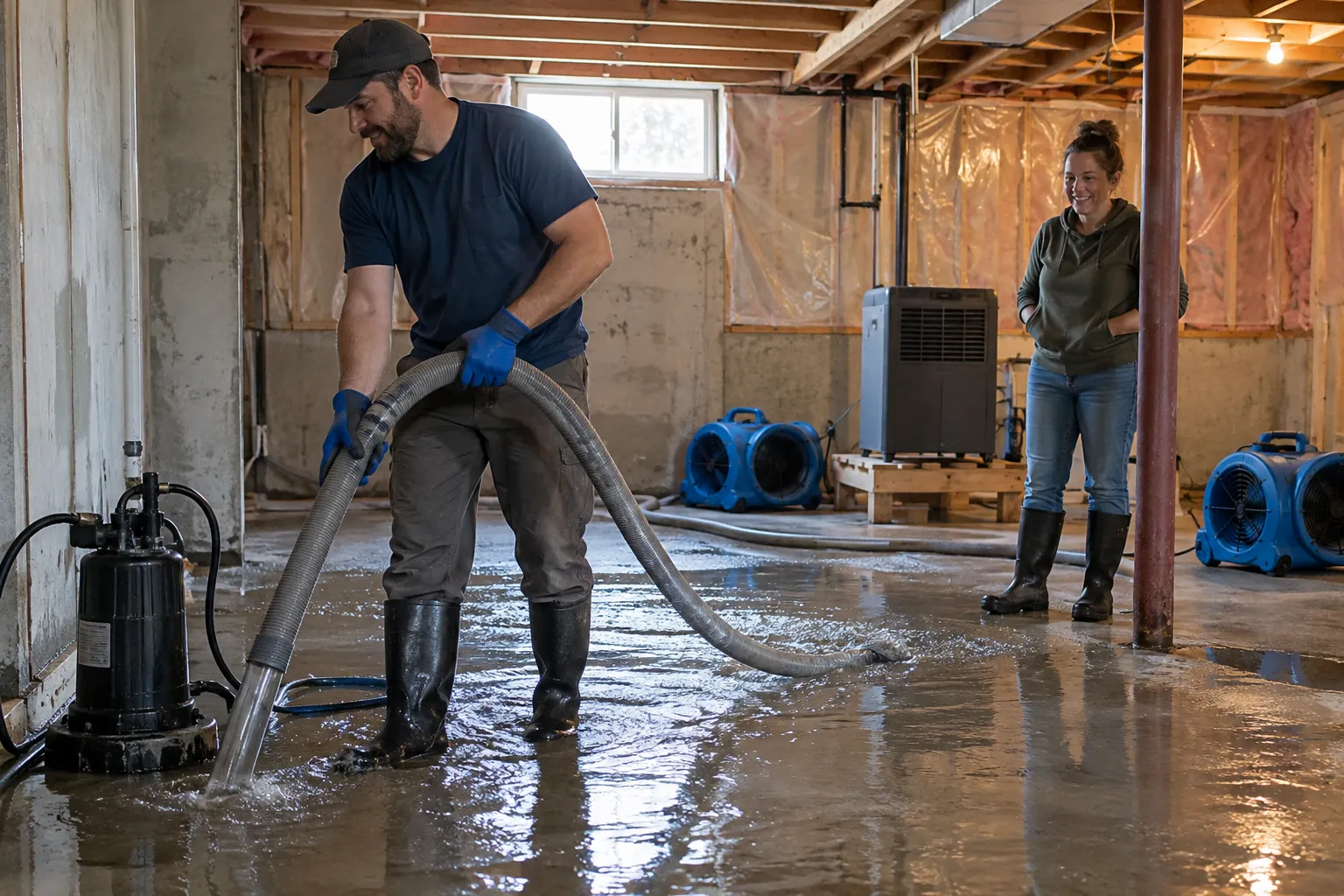
Heavy summer storms, tropical rain and plumbing leaks can send water into a basement, a lower level or a sunken room. In the Greater Miami area, the air is already humid, so a wet space can turn musty fast. Starting cleanup early helps limit the spread of moisture into walls, floors and furniture.
Mysteryexcuse Restoration is a referral service. We do not do the cleanup ourselves. We connect you with an independent provider in our network who pumps out standing water, removes wet materials and dries the space. Request a callback to check provider availability, ask your questions, and decide what to do next with no obligation. You can also request an estimate and ask the provider to explain the steps in plain words.
Water in the basement? Safety comes first
Take a breath. Then check for danger before you do anything else.
- Stay out if water is near outlets, cords or the electric panel.
- Do not wade through standing water while power may be on.
- If you smell gas, leave the home and contact the gas company.
- Keep children and pets upstairs and away from the water.
Floodwater can hide broken glass, nails and germs. If you must go in, wear boots and gloves.
Shut things off if it is safe
If you can reach the main water valve safely, turn it off. That stops a burst pipe or a failed supply line from adding more water. If the power panel is dry and you can reach it without stepping in water, shutting off the breaker for the wet area helps too. If you cannot reach it safely, leave it alone and tell the provider about it.
Reach out early, while the problem is small
Less searching, more progress. That is the whole idea here. Mysteryexcuse Restoration can connect you with an independent local provider, and many providers can respond quickly. Availability varies by provider, so ask what is open to you right now. Request a callback to check. Small problem first: a wet floor is easier to handle than a soaked wall.
Find out where the water came from
The source changes the plan. Common causes in our region include:
- Heavy rain or a stalled storm that overwhelms the yard drains
- A tropical system with rising water around the home
- A burst or leaking pipe, water heater or washing machine hose
- A backed-up drain or sewer line
- Water seeping through a wall or slab edge
Tell the provider what you saw. Clean rainwater, leaking supply water and sewage are handled in very different ways.
Why basement floods need quick action
Water moves into drywall, carpet pads, wood trim and boxes of stored items. In humid weather, damp materials can start to grow mold in a short time. The longer things stay wet, the more has to be removed instead of saved. Acting early often keeps the job smaller.
What flooded basement cleanup includes
The provider does the work. A typical job may include these steps:
- Pumping or extracting standing water
- Removing soaked carpet, padding, insulation and damaged drywall
- Cleaning and sanitizing hard surfaces
- Running fans and dehumidifiers to dry the space
- Checking moisture levels to see if the area is truly dry
If the water was sewage or came from outside, the provider may use stronger safety steps. Ask how they handle that.
Finished and unfinished basements
An unfinished space with a bare concrete floor is often simpler. Water can be removed, the floor cleaned and the area dried. A finished space has more layers to check: flooring, baseboards, walls, insulation and cabinets. The provider may need to open walls to see if moisture is hiding behind them.
Lower levels in slab-built homes
True basements are less common in our area. Many homes sit on slabs. Still, some homes and condos have a lower level, a sunken room, a below-grade garage or a storage space that floods the same way. If your home is a concrete block house or a condo unit, tell the provider what kind of space it is. That helps them bring the right equipment.
Save what you can
Move dry items to a higher, dry spot. Photos, papers and small electronics come first. Hard items like plastic bins and metal tools often clean up well. Soft items like mattresses, rugs and upholstery are harder to save once soaked. Do not turn on wet electronics or appliances. Ask the provider what can be cleaned and what should be tossed.
Take photos before you clean
Take clear photos and short videos of the water line, damaged items and the likely source. Some policies may cover sudden damage, so check your policy and read what it says about flood and water backup. Providers can often help document damage for a claim. Keep receipts and notes.
After the cleanup
When the work is done, ask for a plain summary of what was removed and what was dried. Watch for musty smells, stains or soft spots in the days after. Rebuilding, such as new drywall, flooring and paint, is usually a separate step once everything is dry.
Lower the risk next time
In a stormy, humid region, a few habits help. Keep gutters and downspouts clear. Point yard water away from the house. Check sump pumps, if you have one, before storm season. Run a dehumidifier in damp lower rooms and keep stored items off the floor.
Ask before you hire
A few good questions make the choice easier. Ask the provider:
- Are you licensed and insured where required for this work?
- Can you explain the steps and how long each one may take?
- Will you measure moisture to show the space is dry?
- How do you handle sewage or outside floodwater?
- Can I get a written quote before work begins?
What a good answer sounds like
A good provider answers in plain words. They explain the plan, say what they do not know yet and offer a written quote. They are happy to talk about documentation and moisture readings. If they need to see the space first, that is a sign of care, not a delay.
Red flags to watch for
Be careful if someone pushes you to sign right now, will not give a written quote or asks for a large payment up front. Be wary of vague answers about drying, or a promise that sounds too good. Ask before you hire, and take a moment to compare.
Ready to get started?
You do not have to search through pages of listings. Request a callback to reach an independent local provider, ask your questions and see what availability looks like. There is no obligation.
What's Included
Standing Water Removal
The provider uses pumps and extractors to clear water from floors and low spots.
Wet Material Removal
Soaked carpet, padding, insulation and damaged drywall are taken out so they cannot hold moisture.
Cleaning and Sanitizing
Floors, walls and surfaces are cleaned, with extra care when the water was dirty.
Drying and Moisture Checks
Fans and dehumidifiers dry the space, and readings help show when it is ready.
Typical Flooded Basement Cleanup Costs
Costs vary by job size, water type and how long things stayed wet. These are typical U.S. ranges only. Always ask for a written quote before work starts.
| Item | Typical U.S. range | Note |
|---|---|---|
| Water extraction | $300 – $1,500 | Depends on depth and floor area |
| Wet material removal | $500 – $3,000 | More if drywall and insulation are soaked |
| Cleaning and sanitizing | $300 – $1,500 | Higher for sewage or outside water |
| Drying equipment | $500 – $2,500 | Based on days of fans and dehumidifiers |
| Mold testing or treatment | $400 – $3,000 | Only needed if mold is found |
| Full cleanup project | $1,500 – $10,000+ | Large or finished spaces cost more |
How It Works
Stay Safe
Stay out of water near electricity, shut off the main valve if safe, and keep others away.
Call One Number
Request a callback to reach an independent local provider and ask about availability for your home.
Share the Details
Tell the provider the water source, the room type and what you have already done.
Get a Written Quote
Review the plan and price in writing before work begins. There is no obligation.
Why Call Mysteryexcuse Restoration
Humid Weather Speeds Mold
Warm, damp air helps mold grow, so wet materials can turn into a bigger problem.
Water Spreads Quietly
Moisture can wick into walls, trim and stored boxes before you notice it.
Smaller Jobs Cost Less
Starting early can mean less material to remove and fewer days of drying.
Storm Season Brings Repeats
Frequent summer storms can bring more rain, so drying and fixes should not wait.
Other Services
Need flooded basement cleanup services in Miami?
- Less searching, more doing
- Independent local providers
- Ask for a written quote
- No obligation to hire
Flooded Basement Cleanup Services FAQ
What should I do first when my basement floods?
Stay out of the water if outlets or cords are nearby, and shut off the main water valve if you can reach it safely. Keep kids and pets away, take photos, then call a local provider to check availability and talk through the next steps.
How long does flooded basement cleanup take?
It depends on how much water there is, what it touched and the size of the space. Removing water may take hours, while drying often takes several days. Ask the provider for a plain timeline and a written quote before the work begins.
Does homeowners insurance cover a flooded basement?
It depends on the cause and your policy. Some policies may cover sudden damage, but flood and water backup are often treated separately. Check your policy, call your insurer, and keep photos and receipts. Providers can often help document damage for a claim.
Reach a local provider
Water where it should not be? Request a callback to check which independent providers in our network are available near you, or send a note and request an estimate. No obligation.
No obligation